Shuffle Casino Mines
Quick answer
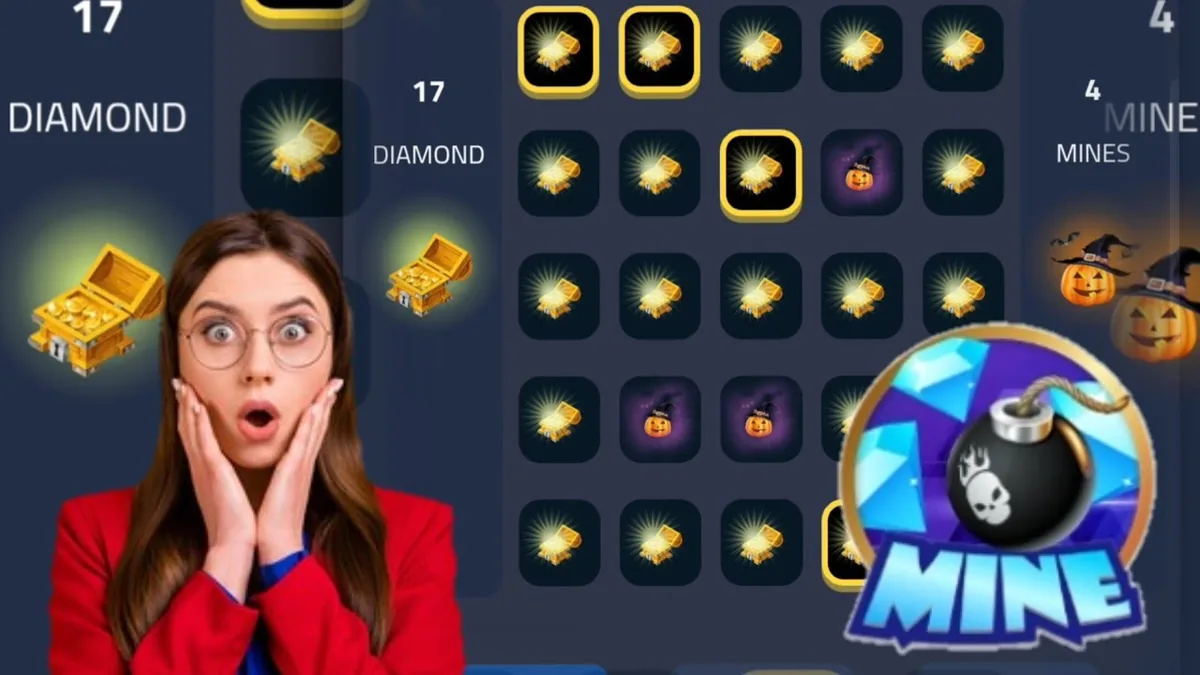
Shuffle Mines is a Minesweeper-style game on a 5×5 grid. You choose how many mines are hidden (1 to 24), then reveal tiles one by one: every safe tile raises your multiplier, and hitting a mine loses the bet. You can cash out at any time.
Mines brings the classic Minesweeper idea to crypto gambling: uncover safe tiles to grow your multiplier, avoid the mines, and decide when to take the money. It is one of the Shuffle Originals where your decisions matter most, which is why it is so popular. Here is how it works and how to play it sensibly.
What is Mines on Shuffle.com?
Shuffle Mines is a provably fair game played on a 5×5 grid of 25 tiles. Before the round you choose how many mines are hidden, from 1 to 24. Every safe tile you reveal increases your multiplier; revealing a mine ends the round and you lose your bet. You can cash out after any safe tile.
How to play Mines on Shuffle
- Sign up and deposit Bitcoin, Ethereum, Litecoin or another supported cryptocurrency.
- Open Mines from the Originals section.
- Set your bet amount with the controls on the left of the game.
- Choose the number of mines (1–24). More mines mean higher multipliers per tile and more risk.
- Click "Bet", then reveal tiles one by one.
- Cash out whenever you like to collect your bet × the current multiplier, or keep going for more.
How the multiplier grows
Each safe tile you reveal makes the next click riskier, because fewer safe tiles remain. That is why the multiplier rises faster and faster. With 3 mines, for example, the first click is safe 88% of the time (22 safe tiles out of 25), but after 10 safe clicks only 12 of the 15 remaining tiles are safe. With 24 mines, a single safe click pays a very high multiplier because there is only one safe tile on the board.
| Mines | Chance the first tile is safe | Style |
|---|---|---|
| 1 | 96% | Very low risk, small multipliers |
| 3 | 88% | Balanced, good for beginners |
| 5 | 80% | Medium risk |
| 10 | 60% | High risk, fast-growing multiplier |
| 24 | 4% | All-or-nothing |
Is Shuffle Mines provably fair?
Yes. The position of the mines is fixed by cryptographic seeds before you click any tile. After the round you can reveal the seeds and verify that the mines were not moved. This also means that no click order or "pattern" changes your odds.
Tips for playing Mines
- Start with small bets and few mines while you get a feel for the game.
- Balance mines and clicks. Few mines with many clicks or many mines with one or two clicks: both approaches work; mixing high mines and many clicks is where balances disappear.
- Decide your cash-out point before the round, for example "3 safe tiles then cash out".
- Set a session budget and stick to it. Responsible bankroll management keeps the game fun.
Conclusion
Shuffle Mines is quick to learn and gives you real control over risk through the number of mines and the moment you cash out. Use small bets, a clear cash-out plan and the provably fair checks, and it is one of the most enjoyable Originals on Shuffle.
Play Mines on Shuffle
Create your account in under a minute and use our code when you sign up.
shuffle-bonus
Frequently asked questions
How many mines should I choose?
Fewer mines mean safer clicks and smaller multipliers; more mines mean bigger multipliers per tile but a much higher chance of losing. Beginners usually start with 1–3 mines.
Is there a pattern to win at Mines?
No. Mine positions are set by provably fair random numbers before you click, so no pattern or tile order improves your odds.